
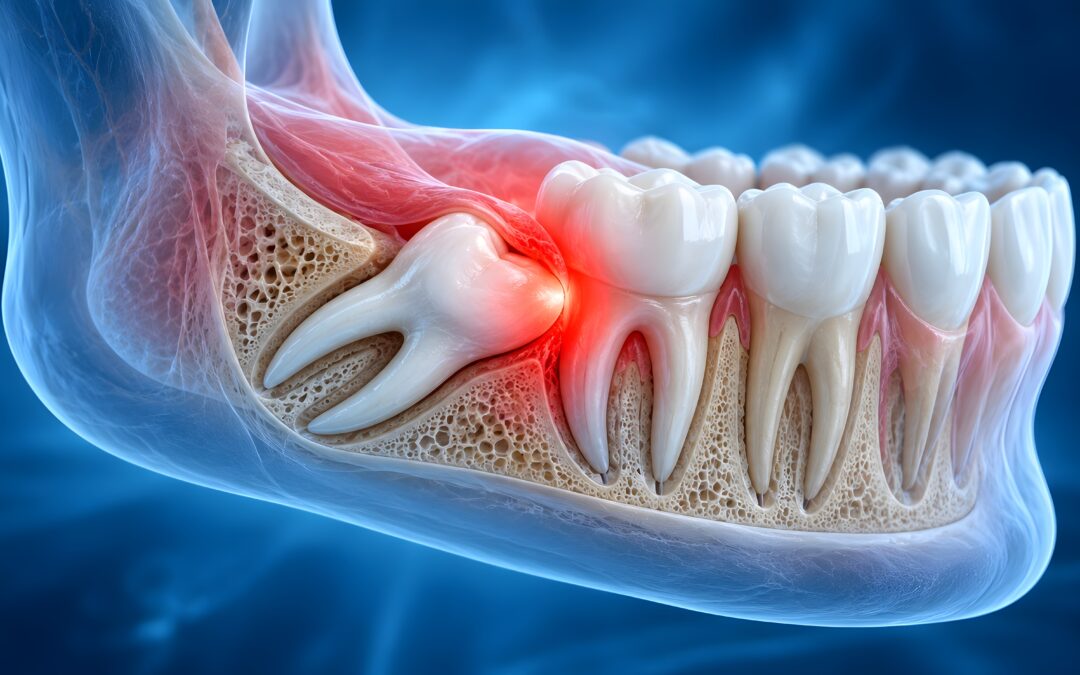
Noticing that your front teeth are becoming crowded can raise questions about your wisdom teeth. These back molars often emerge during the late teenage years or early adulthood, and some remain trapped beneath the gums. Although impacted wisdom teeth are commonly blamed for crooked front teeth, the relationship is not as straightforward as many people assume. Understanding the possible causes of crowding can help you make informed decisions about your dental care.
What Happens When Wisdom Teeth Become Impacted?
Wisdom teeth usually appear later than the other permanent teeth. If there is insufficient space in the jaw, they may fail to come through properly and remain lodged beneath the gums or inside the bone. Dentists refer to this condition as an impaction.
An impacted tooth may grow at an angle, press against a neighbouring molar, or remain in place without causing noticeable symptoms. Depending on its position, it may contribute to local problems such as inflammation, infection, or damage to nearby teeth. However, an impacted wisdom tooth does not automatically cause the teeth at the front of the mouth to shift.
Is There a Direct Link to Front Tooth Crowding?
The idea that wisdom teeth push the entire row of teeth forward is widespread, but research has not established them as the main cause of lower front tooth crowding. Teeth can change position naturally over time, even in people who have never developed wisdom teeth.
Several factors may contribute to crowding, including jaw size, tooth dimensions, changes in the tissues surrounding teeth, and movement that occurs as people age. Previous orthodontic treatment can also be followed by some shifting, particularly if retainers are not worn as directed. Because several influences may be involved, it is not possible to determine the cause of crooked teeth simply by looking at the wisdom teeth.
When Do Impacted Wisdom Teeth Need Attention?
Even if they are not responsible for front tooth crowding, impacted wisdom teeth may still require assessment. A tooth that is partly covered by gum tissue can trap food and bacteria, making the surrounding area difficult to clean. This may lead to gum inflammation or infection.
Other concerns include decay in the wisdom tooth or the adjacent molar, cyst formation, and damage to nearby structures. Some impacted teeth remain symptom-free and may only need monitoring. Removal is not automatically necessary in every case. A dental examination, sometimes supported by X-rays, helps the dentist assess the tooth’s position and identify any existing problems.
What If Your Teeth Are Already Crowded?
If your front teeth have started overlapping or rotating, a dental assessment can help identify possible causes. A Windsor dental clinic can evaluate your wisdom teeth and discuss whether further examination or monitoring is appropriate.
For patients concerned about changing tooth alignment, orthodontics in Windsor may be worth discussing with a dental professional. Treatment options depend on the degree of crowding, bite alignment, oral health, and individual needs. Wisdom tooth removal should not be assumed to straighten teeth or replace orthodontic treatment.
Have Questions About Wisdom Teeth or Crowded Teeth? Connect With Little River Dental!
Changes in tooth alignment can have more than one cause. At Little River Dental, you can discuss your concerns and learn about appropriate next steps following an assessment. Whether you have questions about impacted wisdom teeth or shifting teeth, contact our team to arrange a visit and talk through your options.
Give us a call!