
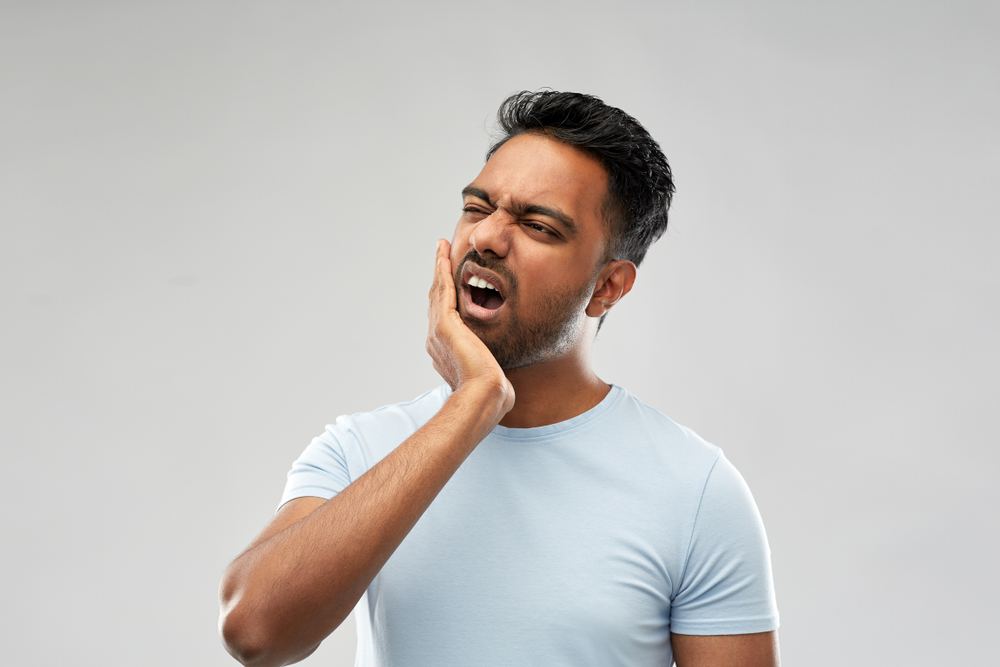
Swelling on both sides of the jaw, especially just below or in front of the ears, can be concerning even when your teeth do not hurt. The cause may involve the salivary glands, jaw joints, lymph nodes, or surrounding tissues rather than tooth decay. Because several conditions can produce similar symptoms, the location, timing, and accompanying signs are important clues. A medical expert should evaluate any persistent or inexplicable swelling.
1. Swollen Salivary Glands
The parotid glands sit in front of each ear and produce saliva. When these glands become inflamed or enlarged, they may cause visible swelling around the cheeks and jaw without a toothache.
Possible causes include viral infections, bacterial infections, dehydration, or blocked salivary ducts. Swelling that becomes more noticeable during meals may suggest a blockage because saliva production increases when you eat. Fever, dry mouth, or an unpleasant taste may also occur.
2. Temporomandibular Joint Problems
The temporomandibular joints connect your lower jaw to your skull, just in front of the ears. Problems affecting these joints or nearby muscles may cause tenderness, tightness, clicking sounds, or difficulty opening your mouth.
Teeth grinding, jaw clenching, and certain jaw movement problems may contribute to discomfort. However, noticeable swelling on both sides should not automatically be attributed to the joints. A clinical assessment can help distinguish joint-related symptoms from gland enlargement or other causes.
3. Enlarged Lymph Nodes or Infection
Lymph nodes may become enlarged when the body responds to an infection affecting the throat, ears, or nearby tissues. Some infections can also cause swelling of the salivary glands on both sides.
If swelling occurs with fever, redness, increasing tenderness, or feeling generally unwell, seek prompt medical assessment. A dental examination may also be appropriate if an oral infection is suspected, even when tooth pain is absent.
4. Could Your Bite or Jaw Alignment Be Involved?
Bite problems and jaw strain may contribute to discomfort around the ears, but they do not explain every case of visible swelling. If you also experience difficulty chewing, an uneven bite, or recurring jaw discomfort, a dental assessment may help clarify the issue.
People exploring orthodontics in Windsor can discuss bite alignment concerns with a dental professional. Orthodontic treatment is not a general solution for unexplained swelling, so the underlying cause should be assessed first.
When Should You Seek Help?
Arrange an assessment if the swelling persists, returns repeatedly, or increases without an obvious explanation. A Windsor dental clinic may assess possible dental causes and advise whether medical evaluation is needed.
Seek urgent care if swelling develops rapidly, comes with fever or severe pain, or makes opening your mouth difficult. Emergency medical care is necessary if breathing or swallowing becomes difficult.
Understand the Cause Before Choosing Treatment
Swelling near both ears without toothache can have several explanations, including salivary gland problems, infection, and jaw-related conditions. Identifying the cause is important because treatment depends on the underlying condition. Avoid assuming that the absence of dental pain means there is nothing to investigate.
Take the Next Step Toward Understanding Your Symptoms!
At Little River Dental, we provide dental examinations and general dental care for patients in Windsor and nearby communities. If you have swelling near your jaw or ears, our team can assess possible dental concerns and discuss appropriate next steps. We can also help determine when medical evaluation may be necessary.